
Blog / For brokers
For brokersThe carrier's over my max on a same-day load. Who decides?
A same-day load needs a truck and the carrier asks for more than your max. Why tools get that call wrong, what it costs, and how to keep the decision yours.
Some tools treat max pay as a wall, so the bot won't go a dollar over, even on a load that has to move today, and the truck goes to a broker who will. Others let a bot agree to a number nobody on your team approved, and you find out after the carrier is rolling.
Example
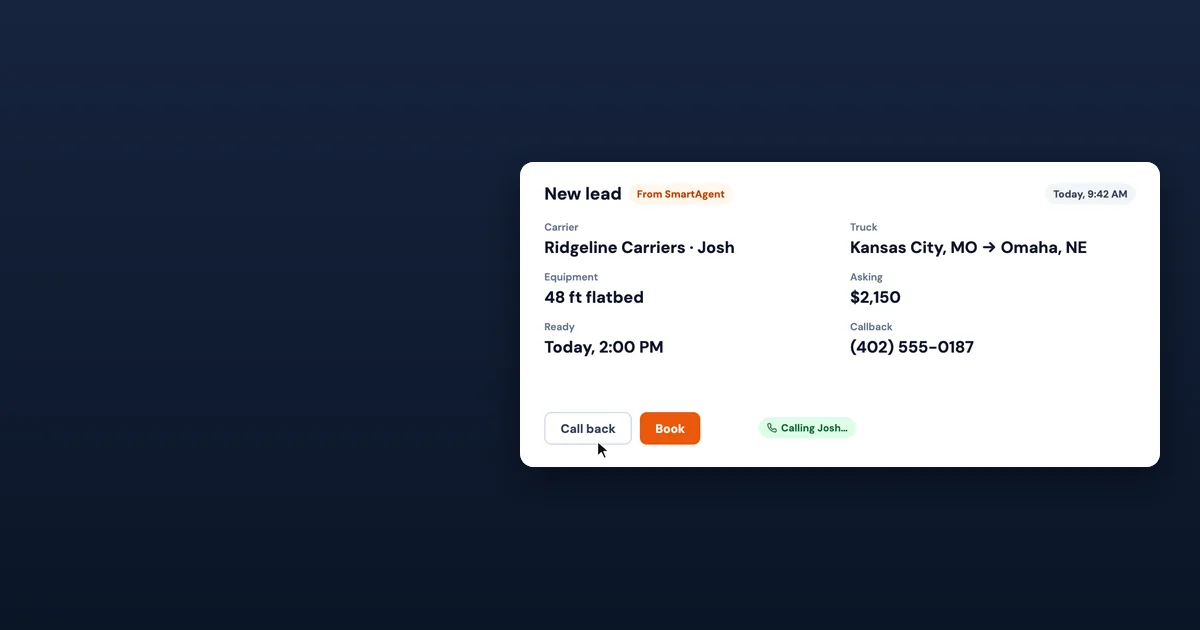
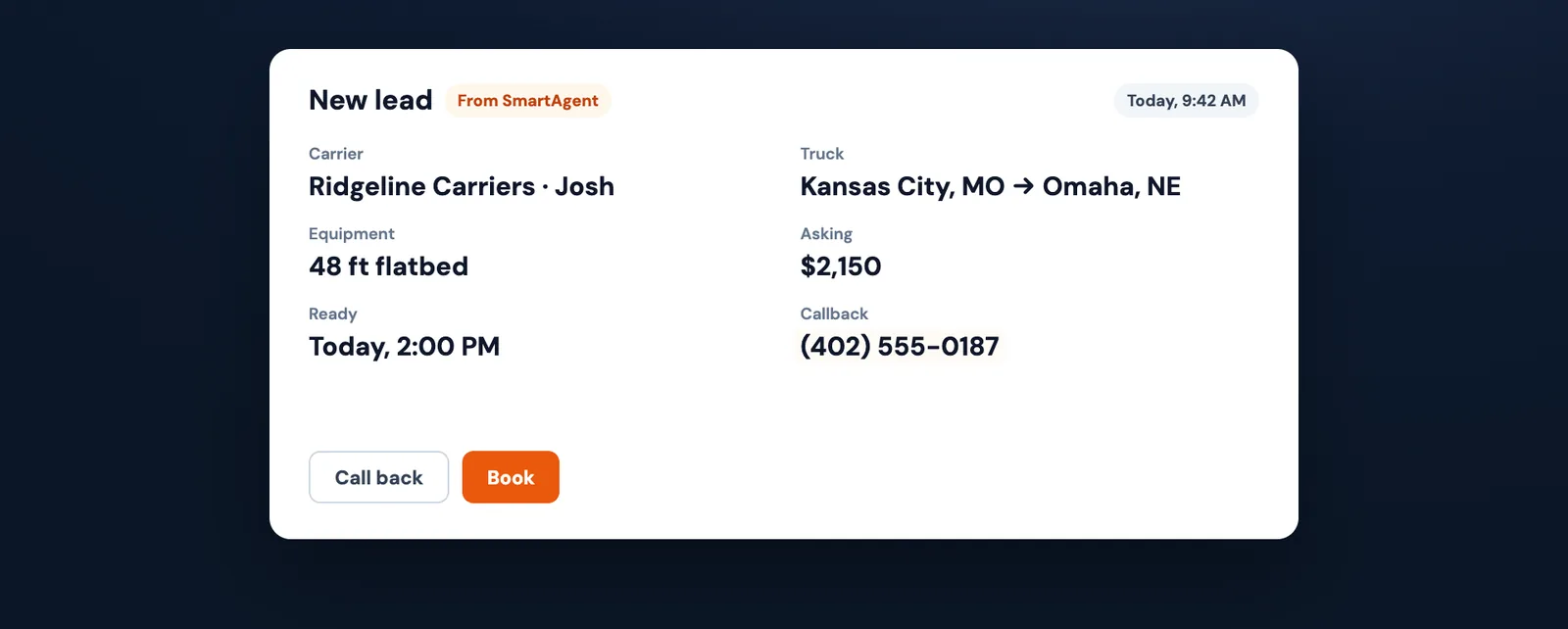
It's 9:42 on a Tuesday. A flatbed from Kansas City to Omaha has to pick up at 2:00 this afternoon. Your max is $2,000. A carrier with a truck sitting in Kansas City calls and asks for $2,150.
That $150 is the whole question. Pay it and the load moves today with less margin. Hold the line and you may still be hunting for a truck at noon. It's a judgment call, and agents told us their tools make it for them: same-day load, and it won't go above max.
Why tools get this call wrong
Max pay is a plan. It's the number you meant to stay under when the load came in. At noon on a load that has to move today, the right answer can change. A rule can't see that the shipper needs it today, or that this carrier has never missed a pickup.
Bots that hard-stop. Some phone bots and posting rules won't go a dollar over the number they were given. The carrier hears no and calls the next broker.
Bots that say yes. The opposite failure is a bot that agrees to the carrier's number on the call. Now somebody has made a promise that nobody on your team approved.
The decision lands too late. If the carrier's ask doesn't reach a person while their truck is still open, the truck is gone by the time anyone decides.
What the extra $150 really costs
Put numbers on it. Say the customer pays $2,250 for the load and your max is $2,000.
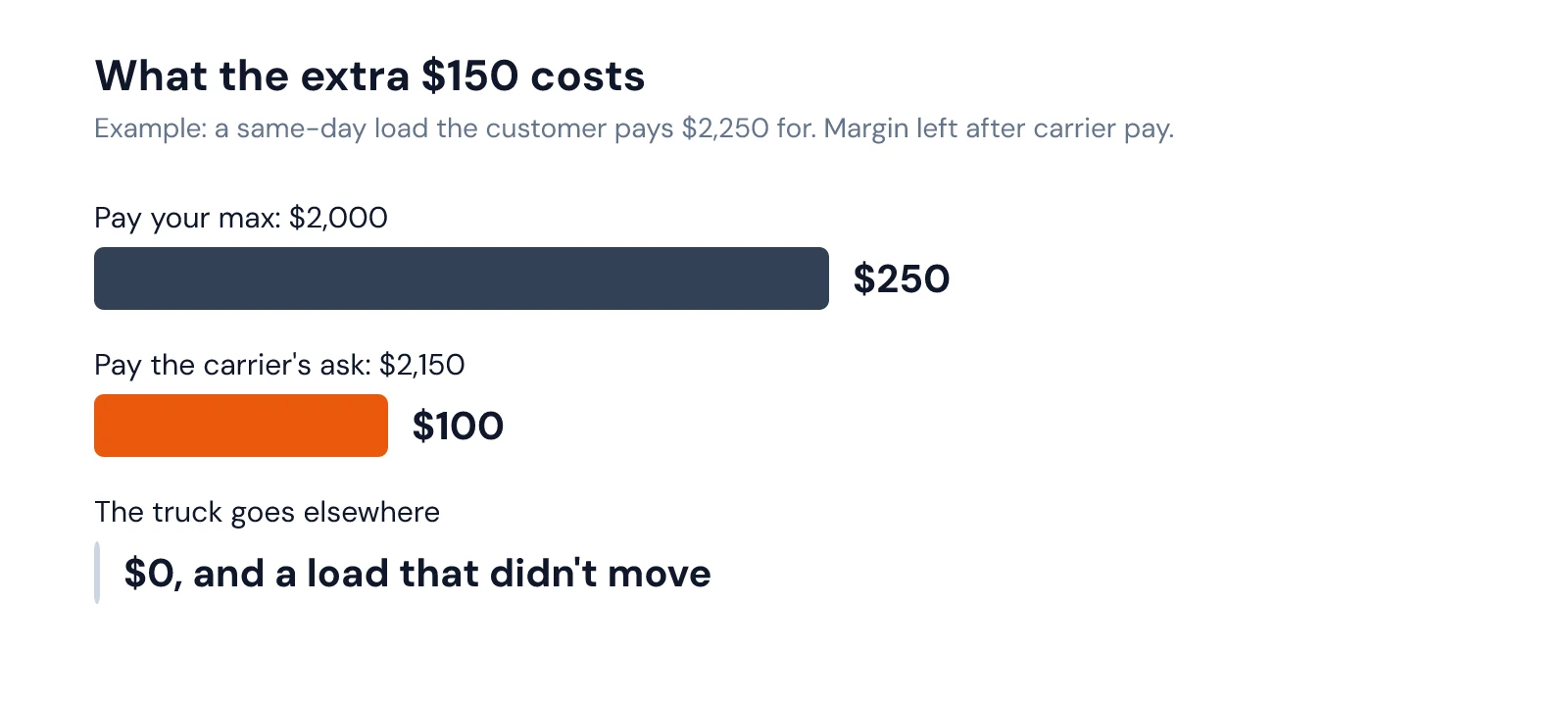
Paying the carrier's $2,150 cuts the margin from $250 to $100. Missing the truck cuts it to nothing, and the customer remembers the same-day load that didn't move. You won't go over max on every load, and you shouldn't. But on the right load you need to be able to decide fast, with the numbers in front of you.
What any agent can do today
- Know your room before the phone rings. For each hot load, decide how far over max you'd go, and who can say yes to it.
- Put same-day loads first. Sort the board by ship date and start your callbacks with the loads picking up today.
- Get the carrier's number, not just a no. Write down what they asked, where the truck is and when it's ready.
- Check the market before you answer. If the lane is paying more than your max, the ask may be fair. Truckstop Rate Insights shows that range.
- Call back while the truck is still open.
SmartAgent: it takes the ask, you make the call
SmartAgent, SmartLoads' super intelligence (SI) phone agent, answers the carrier and gets the details. It never closes the deal.
- It never sees your max. It quotes only your starting rate. Max pay, the invoice and the customer's name never reach it, so it can't give your room away.
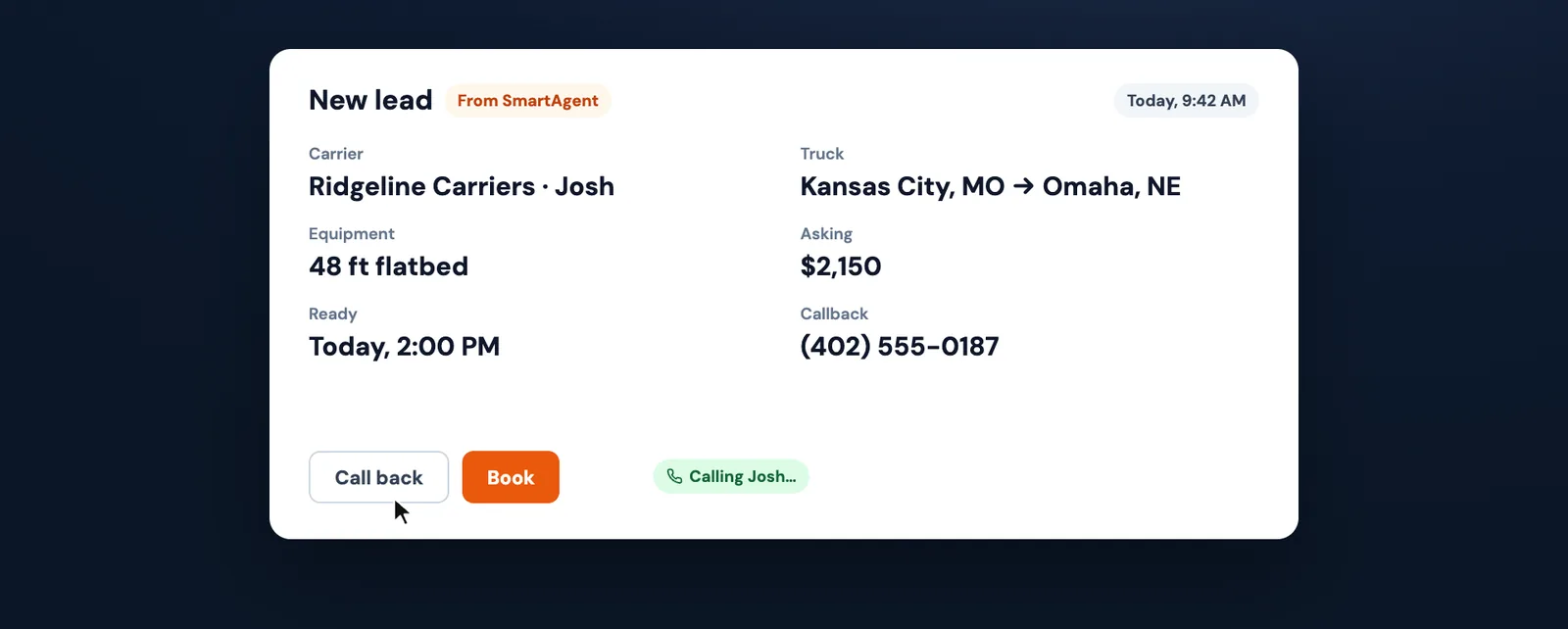
- It writes down the ask. The carrier's number lands on the lead as "Asked $2,150", with the lane, the equipment, when it's ready, the MC and a callback number.
- It never says yes for you. If a carrier accepts your starting rate on the call, the lead shows it as offered, not confirmed, until a person confirms it. A person books every load (why that matters).
You decide with the numbers in front of you. Open the lead, and the load the carrier called about shows its target pay and max pay. If your agency has connected Truckstop, the load also shows Truckstop's Rate Insights market rate for the lane. Worth going over max? Call the carrier back and book at the rate you agree. SmartLoads doesn't stop you. Max pay is your plan, and you can change it when the load calls for it.
What that adds up to:
- Your max stays yours. The phone agent can't give away your room.
- The ask reaches a person, with what they need to decide.
- Over max when it's worth it, at the rate you agree, on your say-so.
The video at the top shows it in a few seconds, and the SmartLoads home page has the rest of the tools. Agents also told us that carriers want to talk to a person. Thinking about running your own desk? Here's how to become a freight agent. To hear it work, watch SmartAgent take a carrier call.
Frequently asked questions
Will SmartAgent go above my max pay?
No. It never sees your max pay. It quotes only your starting rate. Anything above that is a person's call.
Can I pay a carrier more than max pay in SmartLoads?
Yes. Max pay is your plan, and you can book above it. When you book, enter the rate you agreed with the carrier.
What happens when a carrier asks SmartAgent for more?
It writes their number down on the lead for your team. It doesn't negotiate. A person calls back to work out the rate.
How do I know if the carrier's ask is fair?
If your agency has connected Truckstop, open the load to see Truckstop's market rate for the lane next to your target and max pay. If the carrier's ask falls inside Truckstop's range, it's probably fair.